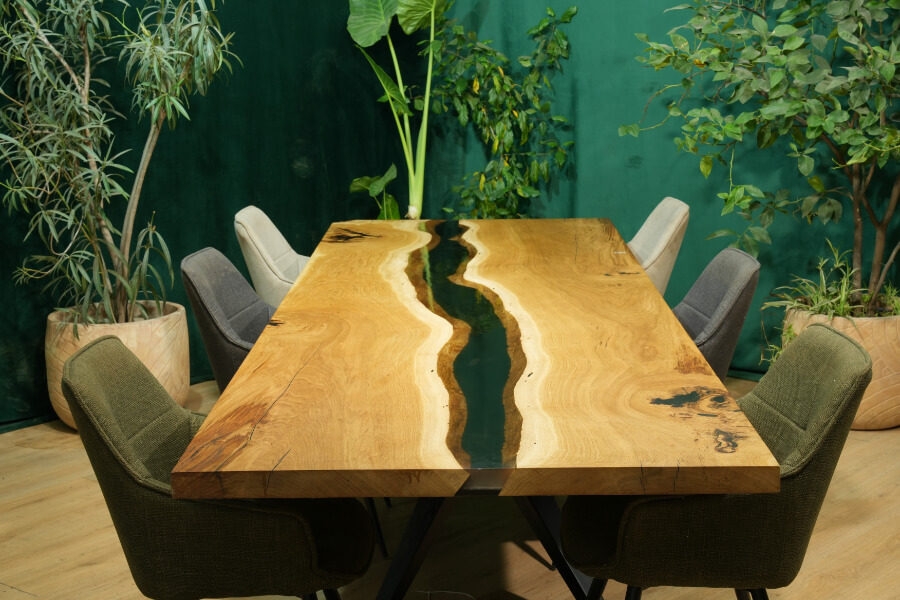
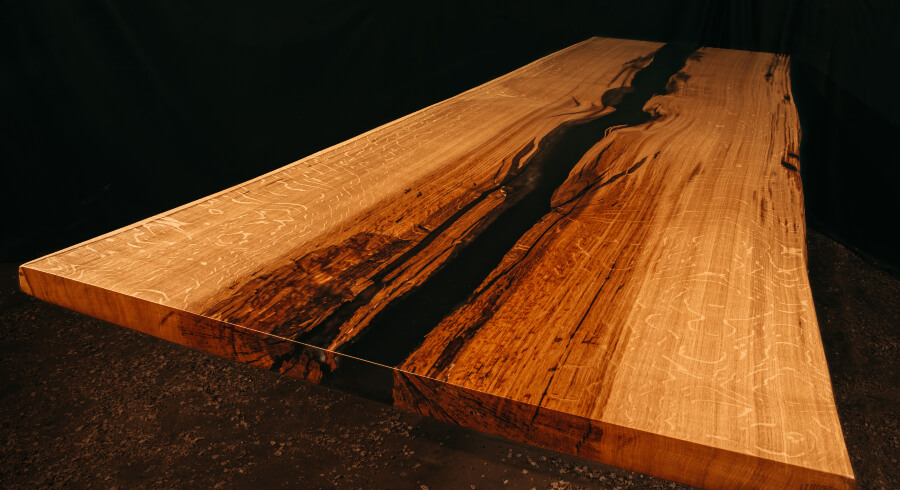
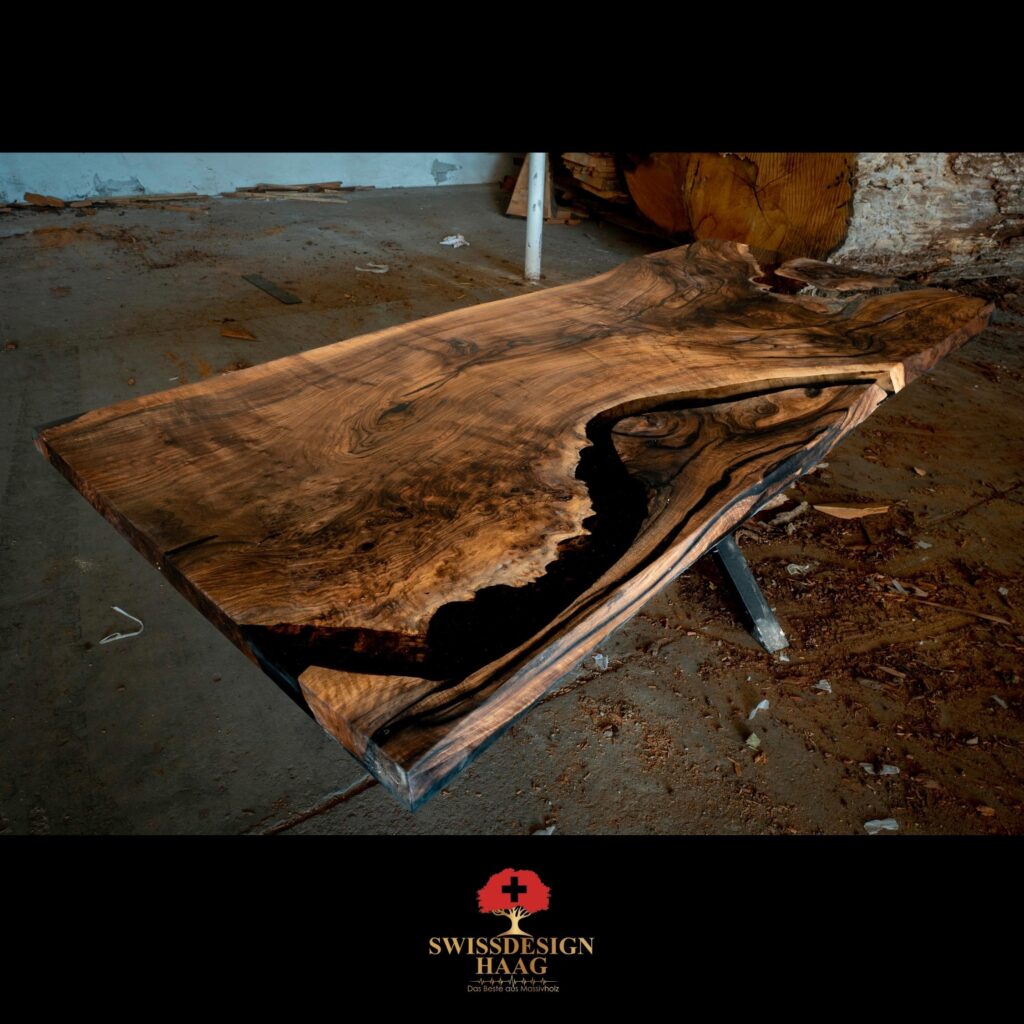
"Live edge" – or Live edge, as we call it in the workshop – means that the edge of the slab isn't cut straight but keeps the natural contour of the log, just as the tree grew.
Where the shape comes from
When we saw the log into planks, the outer edges follow the bark. Instead of cutting them straight, we strip off the bark, then sand and finish them. What remains is a flowing line, different on every piece, with the colour shifting from the dark heartwood to the pale sapwood.
Who it suits
Live edge works best when the rest of the room stays calm: plain walls, understated chairs, not too much furniture. The table becomes the only organic element in the room – and that's exactly its appeal. In an interior that's already busy, the same table can look restless.
The practical side
The flowing edge means the width varies along the length – for example 110–125 cm. That's normal and part of the piece, but it matters when you work out the clearance: always go by the maximum width.
The edge is finished just like the top, so it's smooth and won't snag on clothing. We stabilise natural cracks with butterfly keys or resin so that they stay sound over the years.
The alternatives
If you prefer something plainer, there is also the Straight edge (a cleanly cut, modern line) and the Swiss edge – a straight edge with a chamfer milled into the underside, which makes the top look slimmer without losing its sense of solidity.