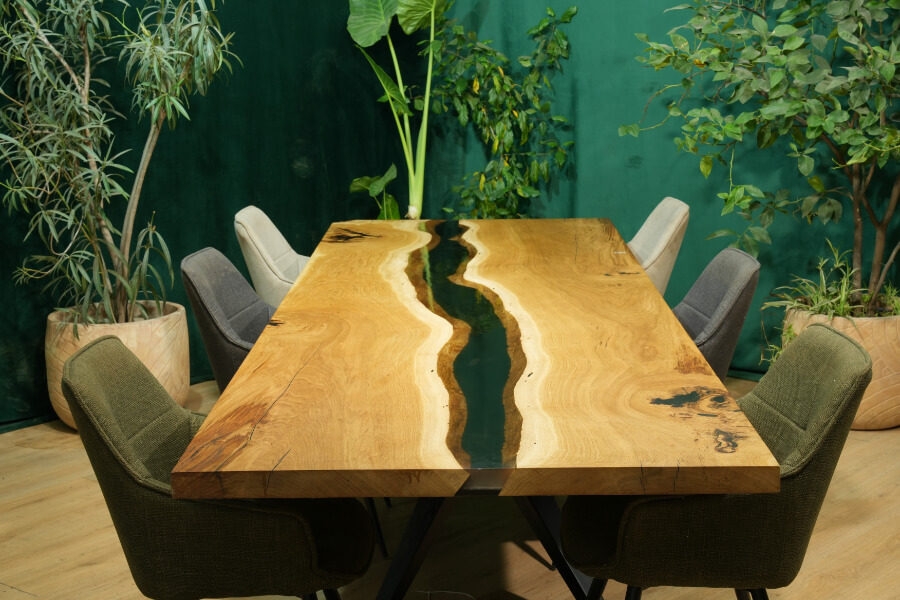
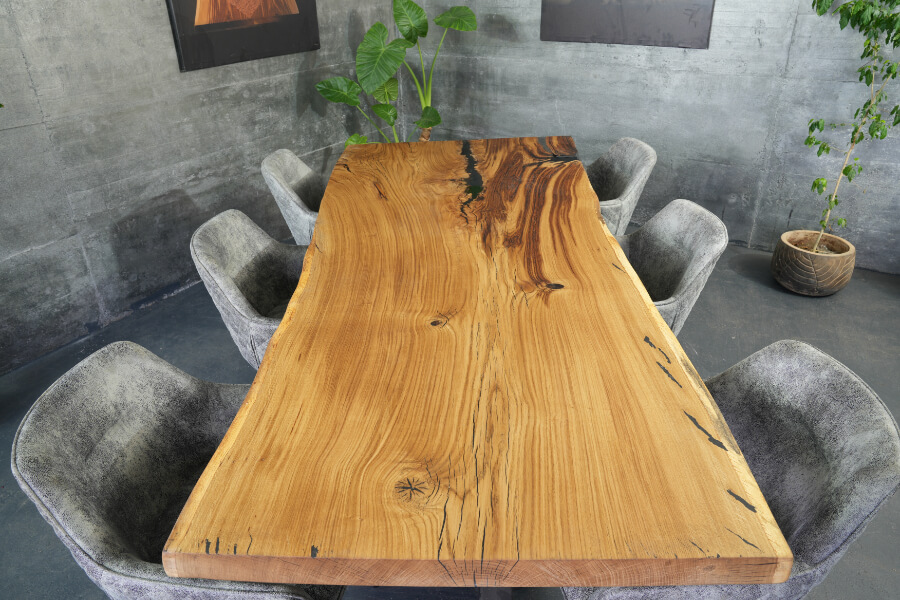
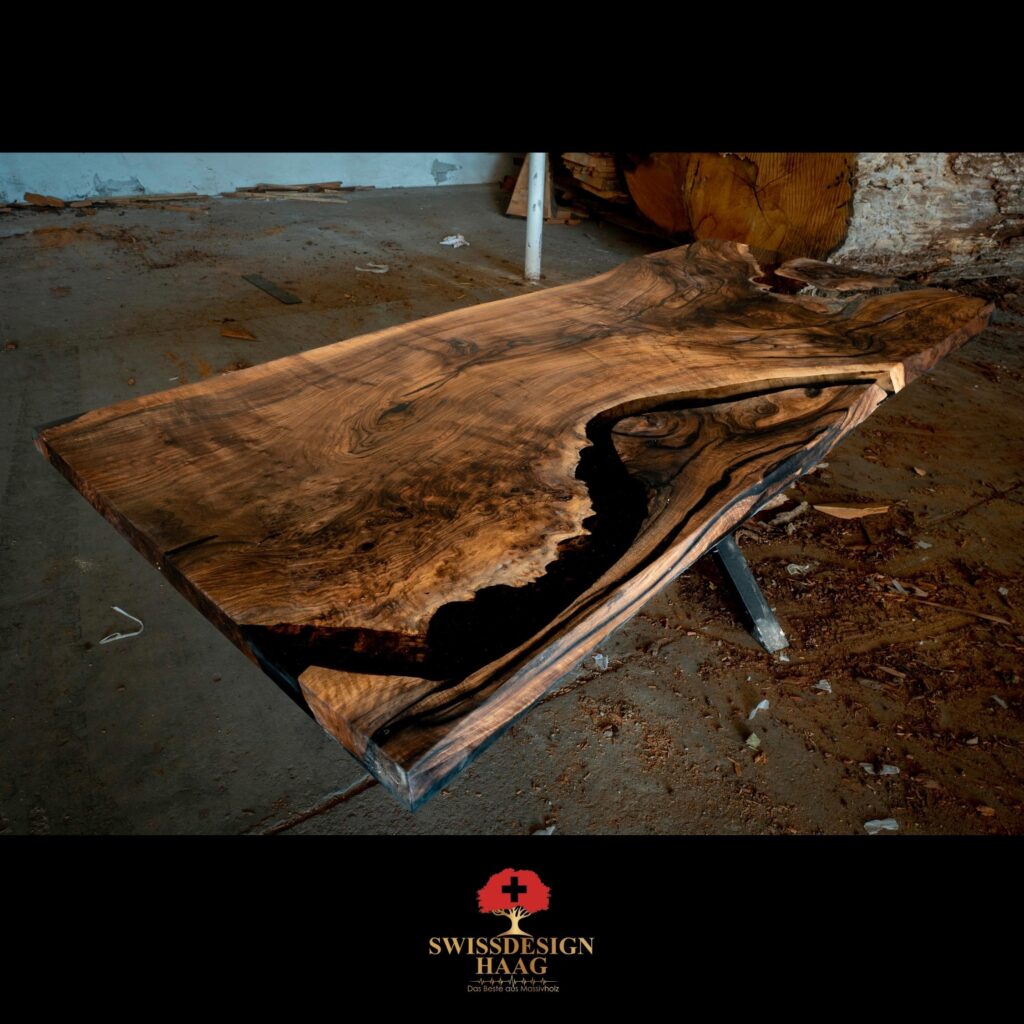
All our tables leave the workshop with a natural oil finish. That's a deliberate choice, and it deserves an explanation – because it shapes how you'll live with the table for the next 20 years.
The difference, in short
Lacquer forms a plastic film over the wood. It protects well, but a scratch stays: it can't be repaired locally, so the whole tabletop has to be sanded back. Oil penetrates the fibres and nourishes them from within. The surface stays wood rather than feeling like plastic, and a scratch can be repaired on the spot – with a little oil and a cloth.
Daily care
A soft, slightly damp cloth. Nothing more. No harsh cleaning products, no scouring pads, no alcohol. Wipe up spills as soon as you see them – not because the tabletop would be damaged straight away, but because it's simply easier that way.
The yearly refresh
Once a year, usually in autumn: sand very lightly with a fine abrasive pad, wipe off the dust, apply a thin coat of oil with a cloth, leave it to soak in for 20 minutes and wipe off the excess. It takes less time than a spring clean, and the tabletop looks as good as new. You'll receive the oil and instructions with your delivery.
What to do about a stain
Oil or wine stain: sand the spot very lightly, oil it, done. Ring left by a glass: usually disappears with oil alone. Deep scratch: the same procedure, with one extra sanding step.