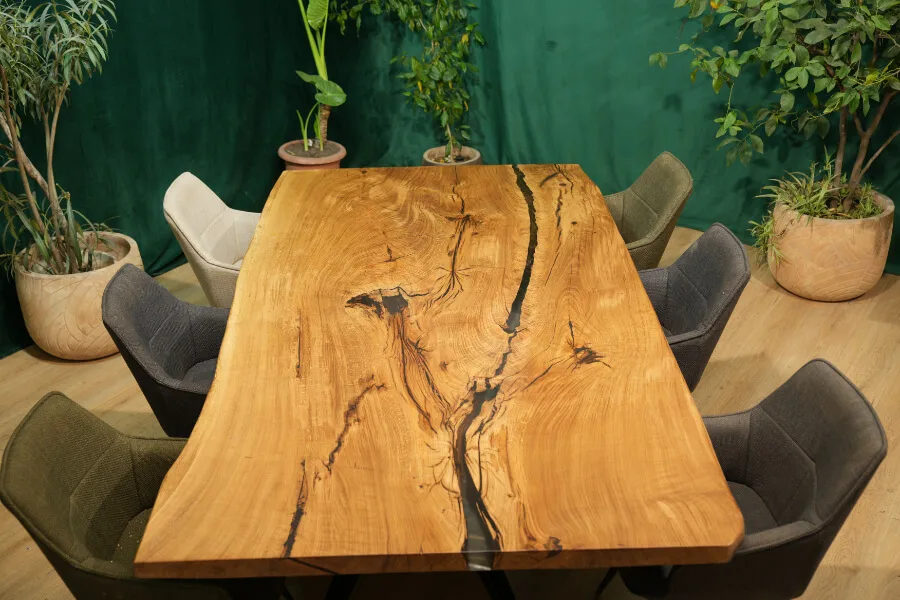
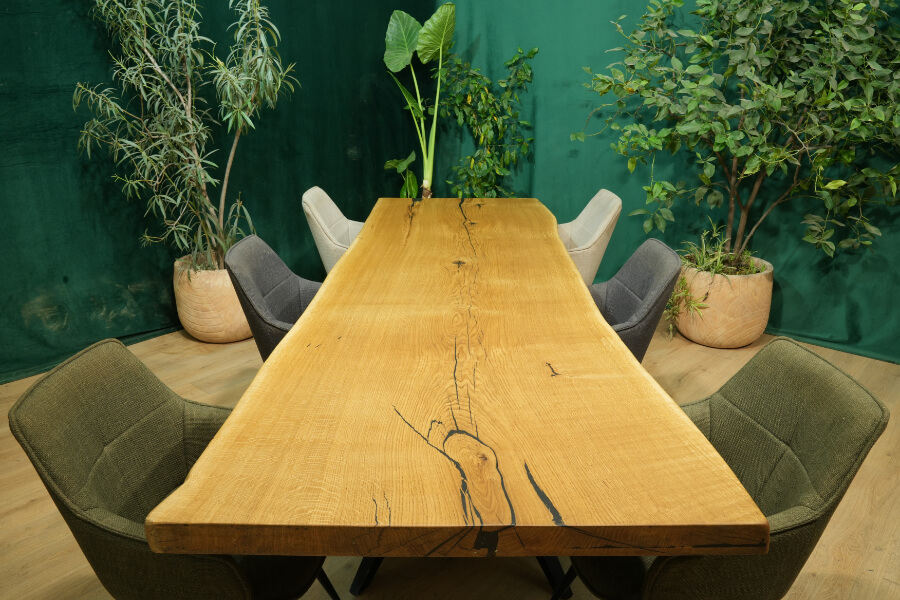
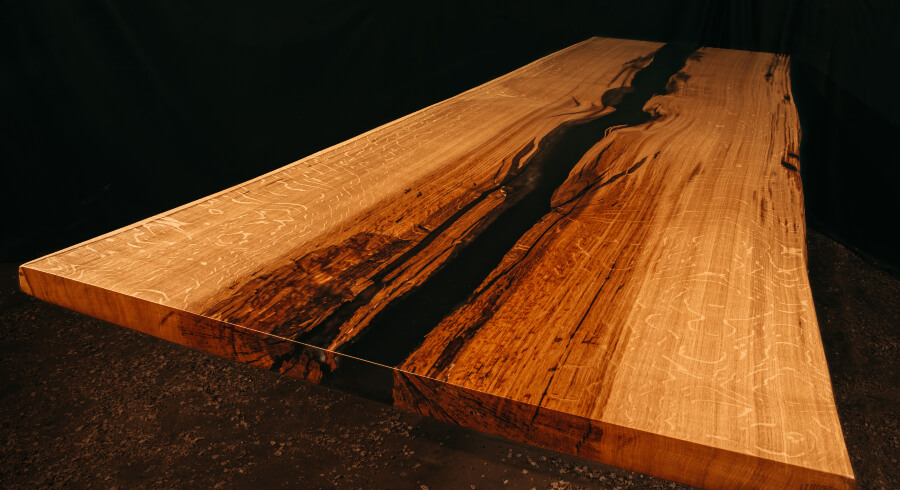
The longest stage in a table's life comes before any work begins. A slab we deliver this year was cut four or five years ago.
Why this matters so much
Freshly cut wood has a moisture content of 60–80%. In a heated house, the relative humidity is 40–50%, which gives the wood an equilibrium moisture content of around 8–10%. Put an under-dried slab in your living room and it carries on losing water – it warps, it cracks and the joints give way. That isn't poor workmanship; it's physics.
How we dry our timber
First, natural air-drying, outdoors under a roof, with sticks between the planks so the air can circulate: two to three years, longer for thick slabs. Then in a room with controlled humidity, where we bring the moisture content down gradually to 8–10%. Rushing doesn't pay here: drying too fast causes internal cracks that only show up later.
What we measure
Every slab is checked with a moisture meter before we work on it and again before finishing. Only slabs within the target range of 8–10% go into production.
And once the table is in your home
Solid wood remains a living material: it "breathes" with the seasons, and its width changes by a few millimetres between winter and summer. That's normal. What isn't normal – warping, cracks that open up – only ever comes from badly dried wood.