Epoxy resin has become a cliché on the internet, with blue tables imitating the ocean. We use it differently: as a technical solution, not as a visual effect.
Its main job: stabilising
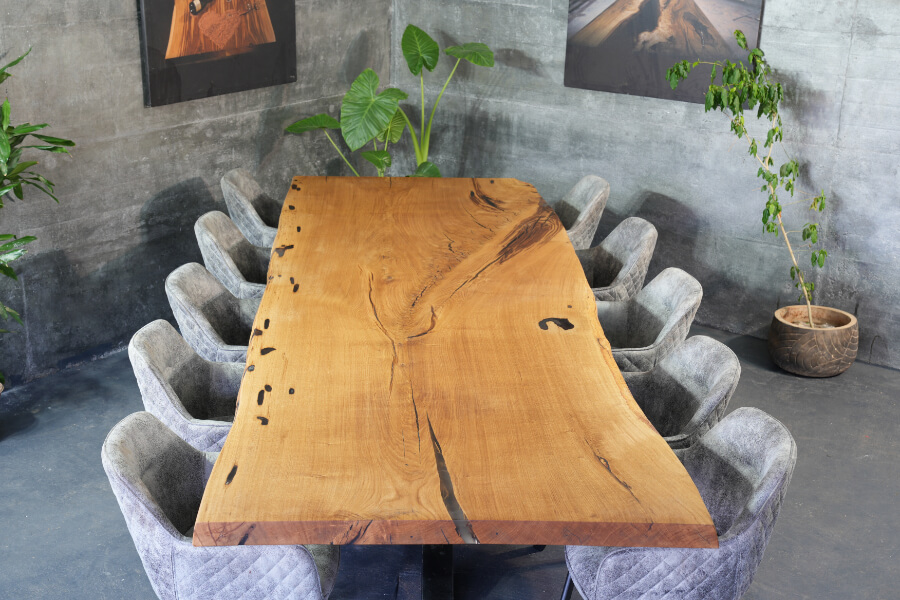
A slab made from a single piece almost always has cracks, open knots or insect holes. Left untreated, they open up over time. We secure them either with butterfly keys (a butterfly-shaped insert let into the wood across the crack – the traditional method) or with clear or subtly tinted resin, when the gap is too irregular for a wooden joint.
When we make "river" tables
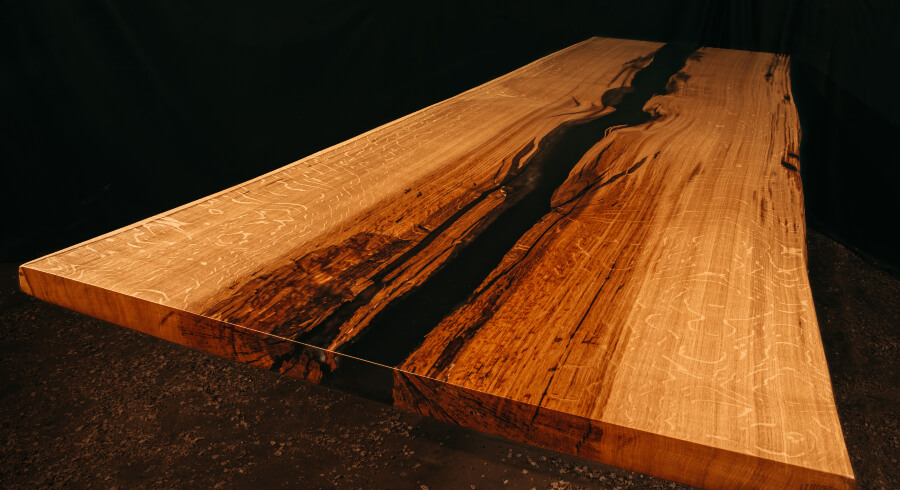
When two planks from the same log have beautiful live edges, we place them facing each other and pour resin between them. The result is a top wider than the log itself would allow, with a continuous line running down the middle. It's a deliberate design choice, not a way of hiding flaws.
How durable is it?
After pouring, the top is sanded and finished with the same protective system as the wood. It stands up to everyday life very well: plates, glasses, daily wiping. Like any surface, it doesn't take kindly to sharp objects being dragged across it, or to hot pans without a trivet.
Does it yellow?
High-quality resins contain a UV filter and keep their colour. What helps most is not leaving the table in direct sunlight for hours on end – good advice in any case, for the wood too.