The word "wood" appears on almost every furniture label. In fact, it describes three very different things – with very different prices and lifespans.
Solid wood
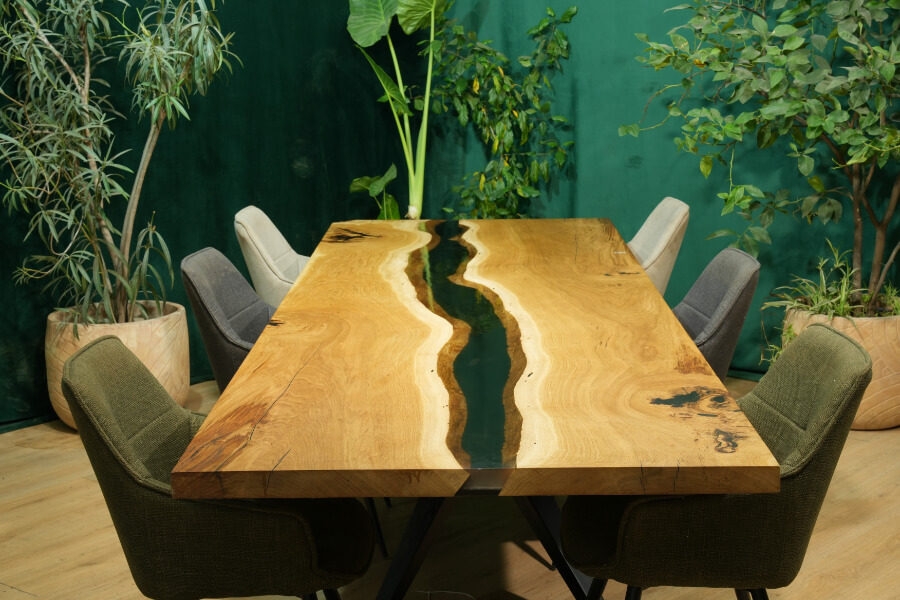
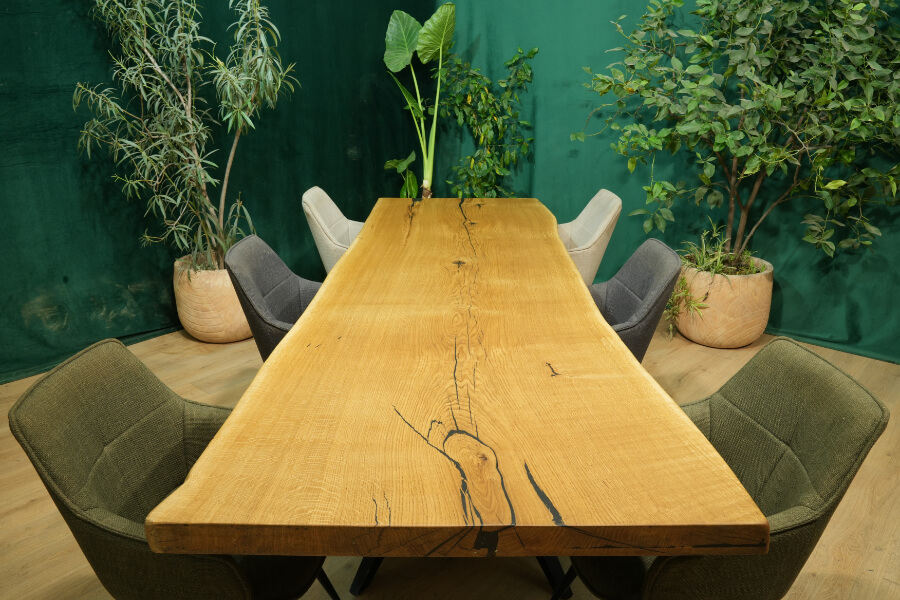
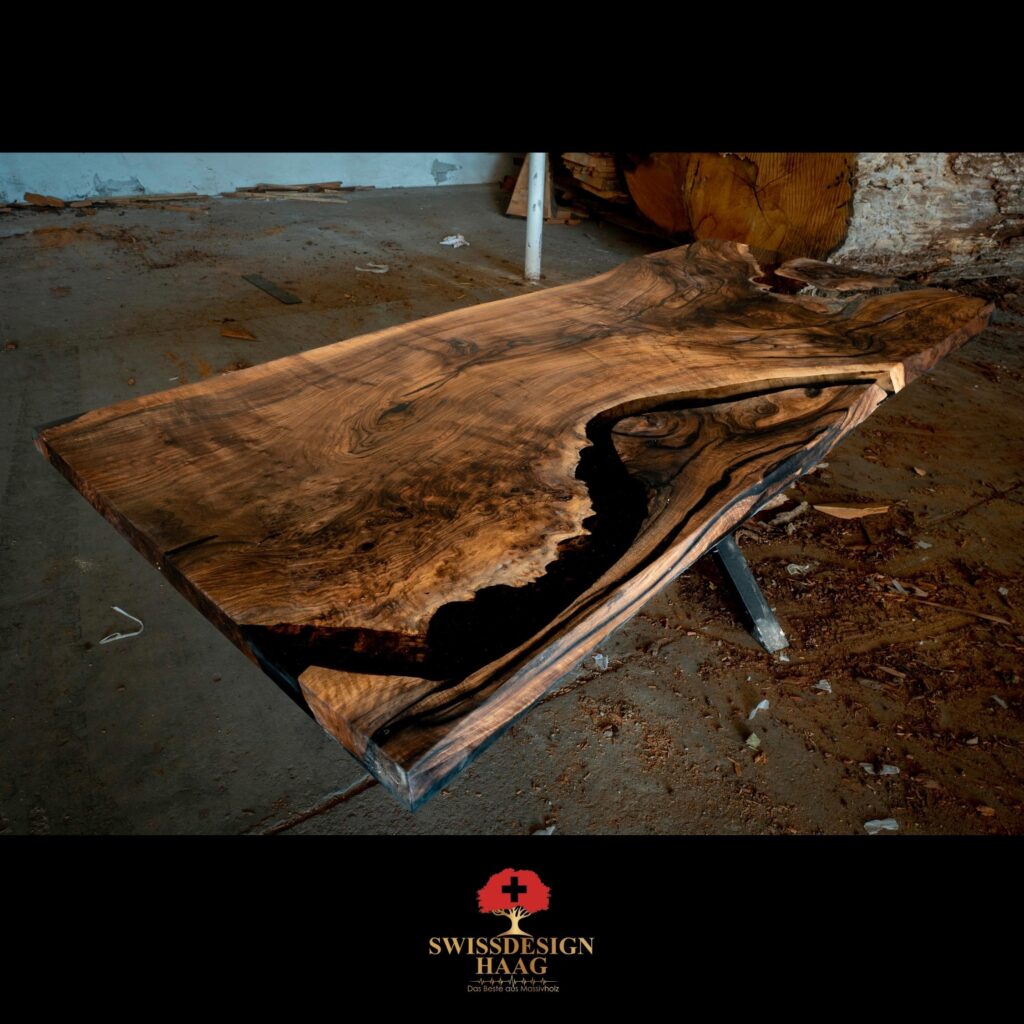
The top is cut straight from the log. The thickness you see at the edge is wood all the way through. It can be sanded and refinished dozens of times – so a solid wood table can still look good after 50 years. It costs the most, moves slightly with the humidity and is the only one that can be fully repaired.
Veneer
A thin layer of real wood (0.6–3 mm) glued onto a core of chipboard or MDF. It looks like solid wood and is considerably cheaper, but the layer is too thin to be properly sanded back. A deep scratch goes through to the core and can no longer be hidden.
MDF and chipboard
Wood fibres or chips bonded with resin and covered with a wood-effect foil. Cheap, dimensionally stable and fine for furniture carcasses. On a tabletop, though, the foil wears through at the edges, and any moisture that reaches the core makes the board swell for good.
How to check in the shop
Look at the edge: on solid wood, the grain pattern on the top carries on round the edge. Look at the ends: if the pattern stops abruptly in a straight line, it's veneer. And lift a corner – solid wood is heavy, and weight doesn't lie.